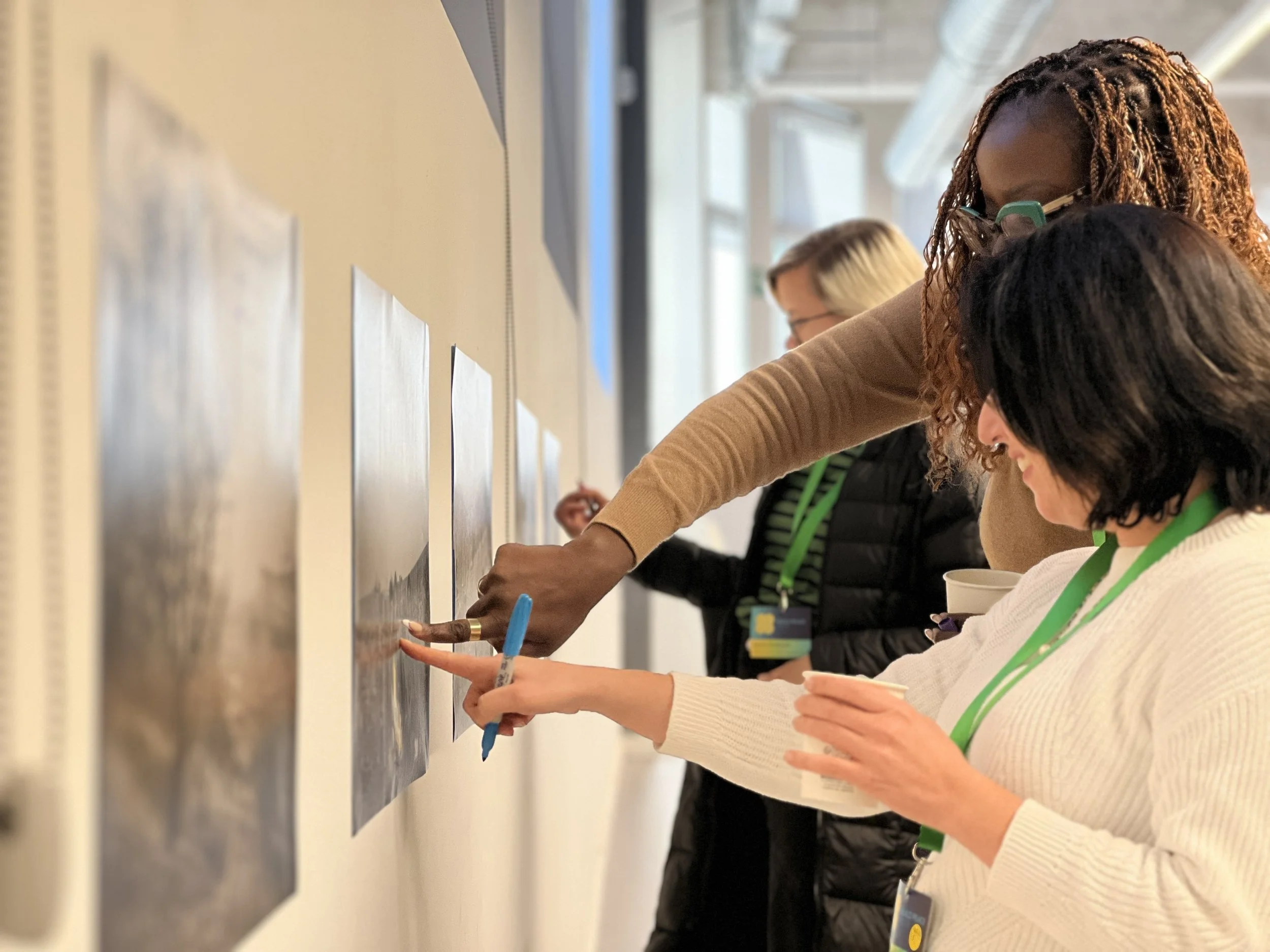
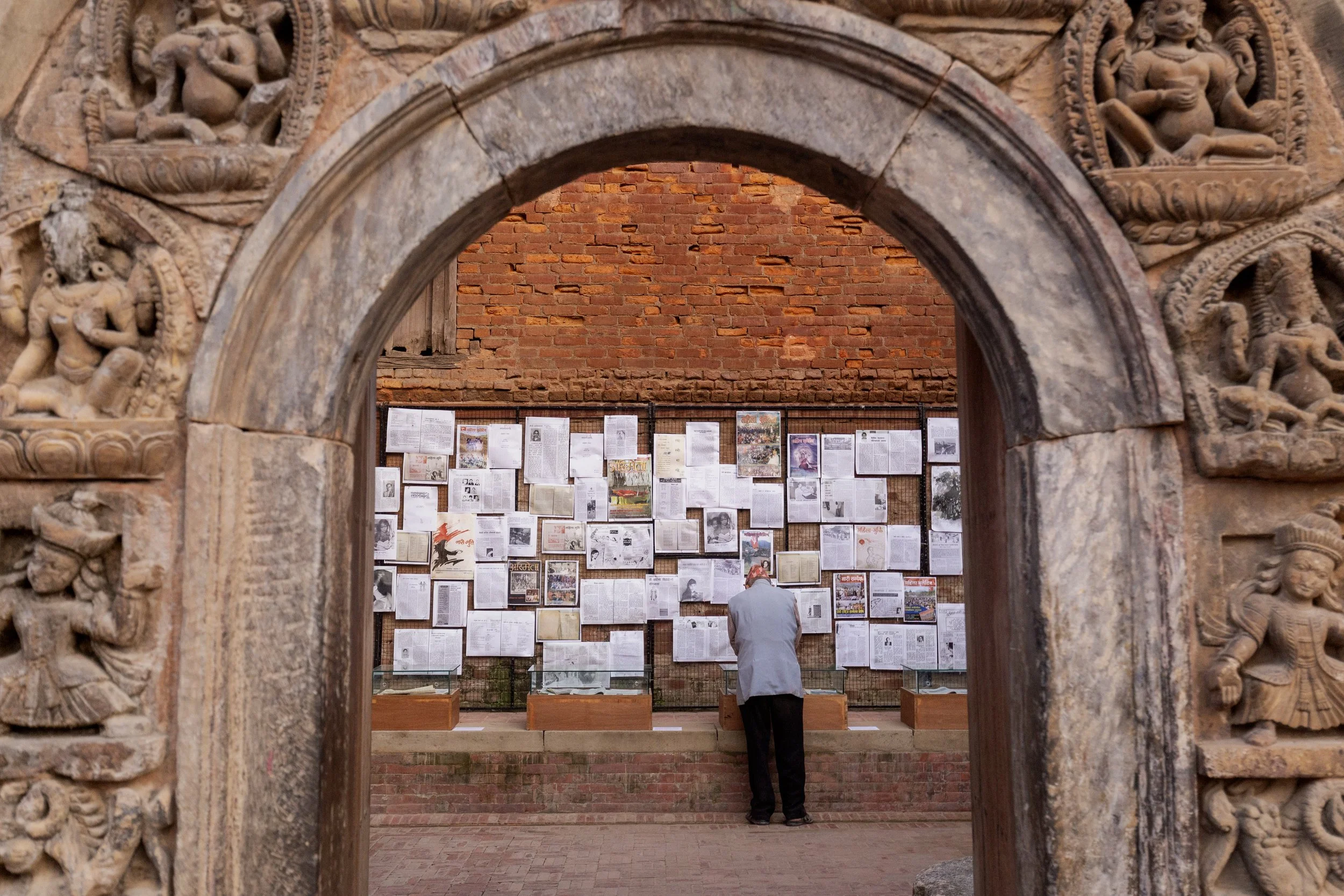
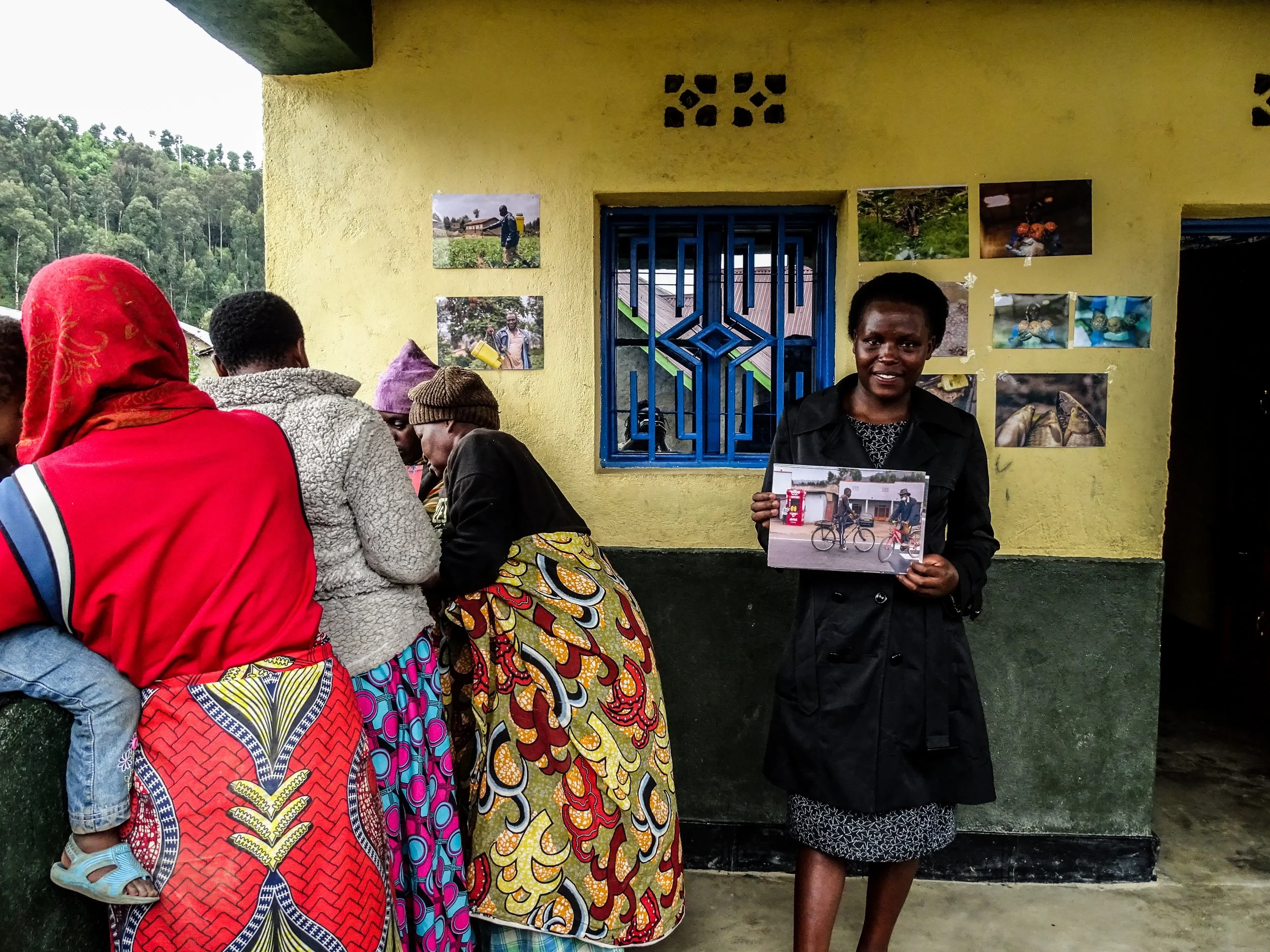
Imaging Peace exhibition at Build Up Conference, Barcelona (left); Nepal Picture Library, FMP exhibition in Kathmandu, Nepal © Nepal Picture Library (middle); Aline’s Home Stay Exhibition in Rwanda © Kigali Centre for Photography (right)
Imaging Peace
2020–present · Principal Investigator · King’s College London · Funded by a Leverhulme Early Career Fellowship (2021–24), ESRC Impact Accelerator Grant · Winner SSPP Impact Prize
Based in the Department of War Studies at King’s College London, Imaging Peace is the first multi-country empirical study of visual peacebuilding. Working with partners I have investigated how communities affected by conflict use images to transform conflict, resist violence, repair relationships and imagine peace.
There is extensive scholarship on war photography, but little is known about relationship between photography and peace. Imaging Peace conducted a review of visual peacebuilding projects, practices, ethics and impact across 30 countries and undertook six indepth case studies and action research projects. They were chosen for the diversity of their contexts, from post-genocide healing to frozen conflict and ongoing violence, and of their approaches, from photo collectives and photovoice to community archives and therapeutic photography. Working closely with local partners, the research combined archival work, interviews, participant observation, photo-elicitation and participatory analysis.
The research shows that how peace is imaged shapes how it can be imagined. Images do not simply depict peace. Visual peace practices are generative, shaping the conditions in which peace becomes enacted and politically possible.. When peace is mostly pictured through the lens of war or thorough generic, abstract symbols this constrains our peace imaginaries. The project identifies six ways in which images and image-making can contribute to peace, from fostering healing and dialogue to making peace actors visible and navigating difference. It also shows that these effects are never automatic: they depend on intentional, context-sensitive practice. Imaging Peace was awarded the SSPP Impact Prize, featured in a major steet exhibition on one of London’s busiest throughfares and its practitioner guide has been accessed by NGOs, educators, visual producers and peacebuilders in more than 80 countries.
Country case studies and partners
Rwanda: Kigali Centre for Photography
Colombia: Everyday Peace Indicators
Bosnia and Herzegovina: Post-Conflict Research Centre
Nepal: Nepal Picture Library
Mexico: Chiapas Photography Project
Northern Ireland: Belfast Exposed
Outputs
Website
imagingpeace.org: the project website, with 26 peace photography case studies
Book and guide
Fairey, T. (2026). Imaging Peace: Transforming Conflict, Resisting Violence and Building Community through Photography. Edinburgh University Press.
Fairey, T. and Guyon, I. (2025). Peace Photography: A Guide. King’s College London. Available in English, French and Spanish.
Selected Articles and chapters
Fairey, T. (2024). ‘The Home Stay Exhibitions’. Journal of Intervention and Statebuilding.
Fairey, T. (2023). ‘Peace Is Possible: The Role of Strategic Narratives in Peacebuilding’. Media, War & Conflict.
Fairey, T., Cubillos Rodriguez, A. and Muñoz, C. (2023). ‘Photography and Everyday Peacebuilding’. Peacebuilding.
Beller, R., Fairey, T. and Möller, F. (2024). ‘Peace Photography and Visual Peacebuilding’. In The Routledge Handbook of Conflict and Peace Communication. Routledge.
Fairey, T. and Nkinzingabo, J. (2025). ‘The Images That Define Us: A Photo Elicitation Interview with Jacques Nkinzingabo’. In Picturing Peace. Bloomsbury.
Exhibitions
2026: Bologna Peace Forum
2025: Imaging Peace, large-scale street exhibition, Bush House, the Strand, London (King’s Culture)
2025: Build Up Peace conference, Barcelona
2023: Build Up Peace conference, Nairobi