Research Themes
My research is organised around five connected themes. Each brings together scholarship, collaborative projects and practice, reflecting work that spans peace and conflict studies, visual politics and collaborative knowledge and evidence production.
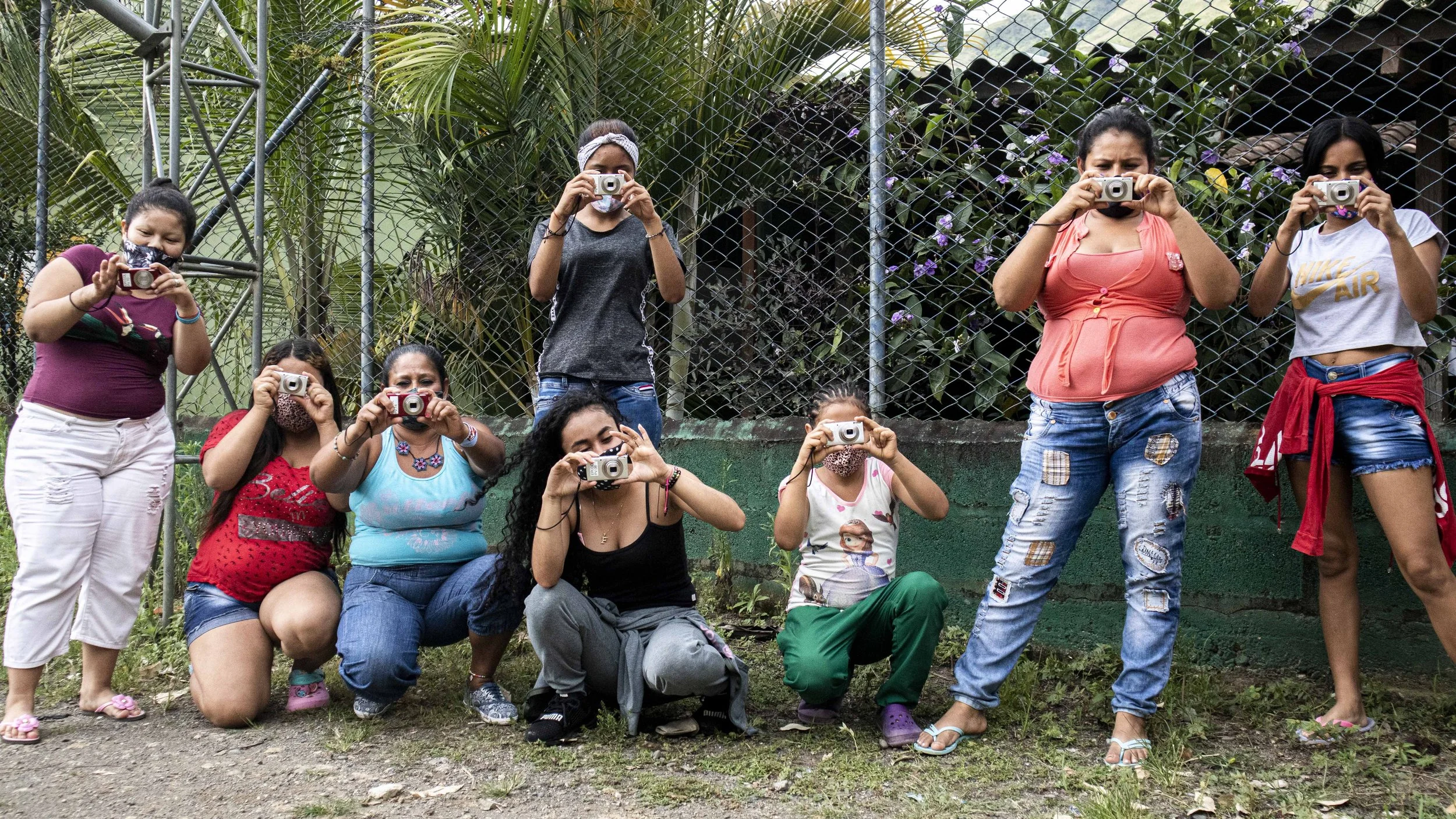
© Edwin Cubillos / Everyday Peace Indicators
Visual Peace
Images of war and violence have long shaped how conflict is understood and pursued. Images of peace have received far less attention. This theme asks how peace is seen, represented and imagined, and what impact that has on the political imagination and for those affected by conflict and violence. Through Imaging Peace, the first multi-country empirical study of peace photography, my work examines how photography is being used to repair relations, pursue justice, foster social healing and resist violence. The research argues that visual peace practices are generative: they do not simply depict peace but shape the conditions in which it can be imagined and enacted. Based on comparative fieldwork in six conflict-affected contexts, it reveals how dominant images of peace are narrow and passive, and identifies six pathways through which image-making fosters healing, dialogue, agency and plural visions of peace. It also specifies the conditions under which these effects hold, since images can entrench division as readily as they disrupt it.
Projects: Imaging Peace · Everyday Peace Indicators · Fotodiásporas · Home Stay Exhibitions
Key publications
Fairey (2026). Imaging Peace. Edinburgh University Press.
Fairey and Guyon (2025). Peace Photography: A Guide. King's College London.
Fairey (2024). “The Home Stay Exhibitions”. Journal of Intervention and Statebuilding.
Beller, Fairey and Möller (2024). “Peace Photography and Visual Peacebuilding”. Routledge Handbook of Conflict and Peace Communication.
Fairey, Cubillos & Munoz (2023): “'Photography and Everyday Peacebuilding: Examining the Impact of Photographing Everyday Peace in Colombia'', Peacebuilding
Fairey (2023). “Peace Is Possible: The Role of Strategic Narratives in Peacebuilding”. Media, War & Conflict.
Fairey, T. (2023). 'Images from Exile: Participatory Photography as a Means for Reparations and Healing', Membrana

© Robert Golden / Izazov
Conflict Transformation and Depolarisation
This theme examines how creative practice contributes to conflict transformation, transitional justice and reconciliation, and how it can build connection across entrenched division. Working with artists, activists and communities, my research has explored what arts-based reconciliation work does, how it can be evaluated, and how artists themselves reckon with the past. More recent work addresses artistic responses to conflict-related gendered violence and their role in advocacy, recognition and repair.
Areas: narrative peacebuilding · arts and reconciliation · creative transitional justice and memory work · arts and inclusive peacebuilding
Projects: Art & Reconciliation · Intersectional Gendered Violence · Izazov! · Surfacing Time
Key publications
Redwood, Fairey and Kerr (2025). “Reckoning with Reconciliation: Art and Artists in Bosnia and Herzegovina”. International Journal of Transitional Justice.
Fairey and Kerr (2025). Advocacy, Recognition and Repair: Artistic Responses to Conflict-Related Gendered Violence. VEM Network Working Paper 5.
Fairey (2023). “Peace Is Possible: The Role of Strategic Narratives in Peacebuilding”. Media, War & Conflict.
Redwood, Fairey and Hasić (2022). “Hybrid Peacebuilding in Bosnia and Herzegovina”. Journal of Peacebuilding & Development.
Fairey and Kerr (2020). “What Works? Creative Approaches to Transitional Justice in Bosnia and Herzegovina”. International Journal of Transitional Justice.
Fairey, T. (2018). 'Participatory Arts and Peace-Building: Embodying and Challenging Reconciliation'. In Participatory Arts for Invisible Communities, ed. by I. Sertić, 204–14. Omnimedia.
Fairey, T. (2017). The Arts in Peace-Building and Reconciliation: Mapping Practice. Art & Reconciliation Working Paper Series.
Participatory & Visual Methods
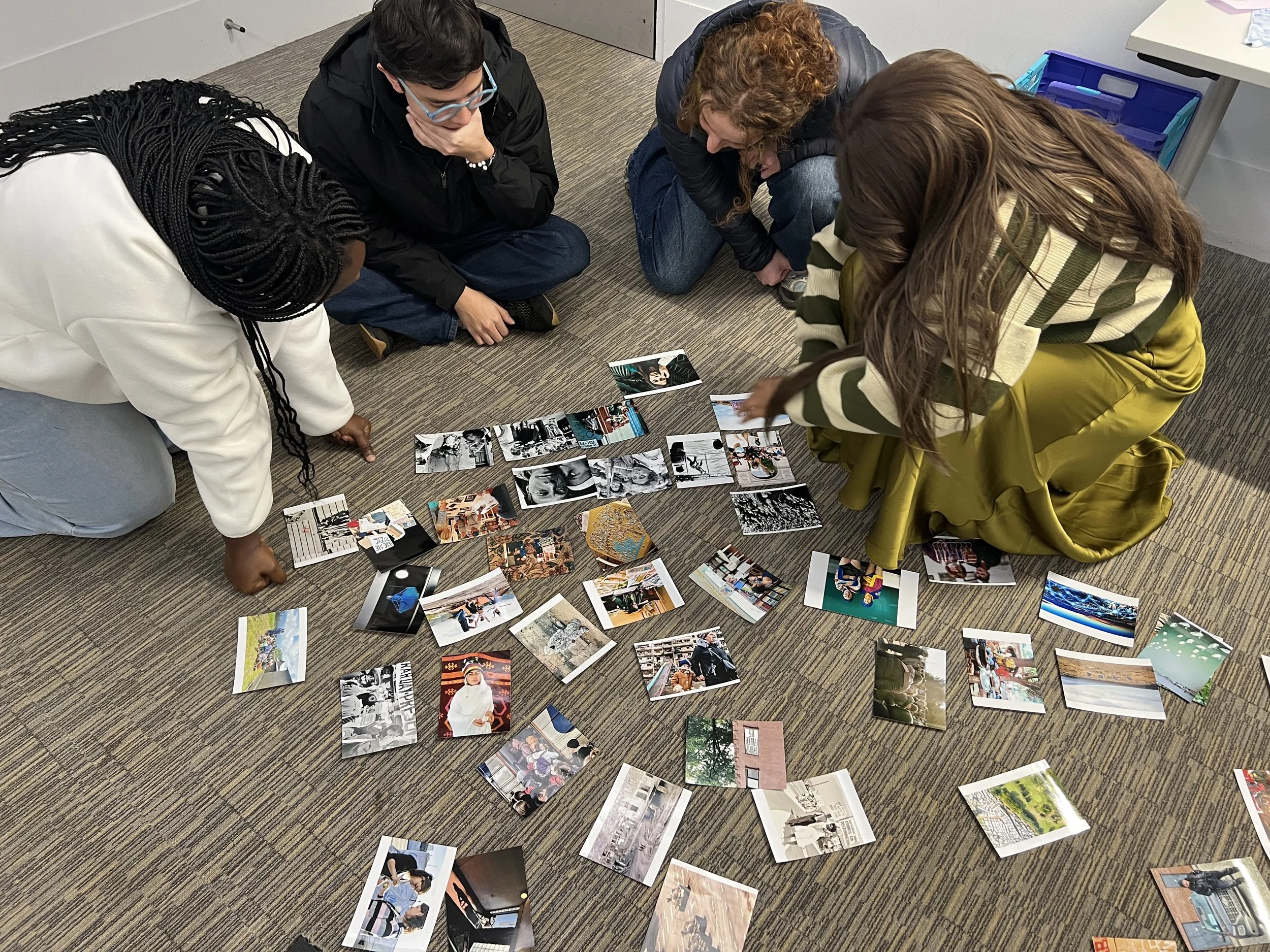
This theme focuses on the design and ethics of photovoice, creative and arts-based methods. It asks what participatory visual methods do for those who take part, what they can and cannot achieve, and how they can be practised ethically. Building on two decades of practice and my doctoral research, which questioned the promise that participatory photography will ‘give voice’ and ‘empower’, my work develops visual, embodied and creative methods for the social sciences, including therapeutic and trauma-informed approaches to working with people affected by violence and mental distress.
Projects: Peace Photography: A Guide · Whose Pictures Are These? · Therapeutic Photography · Digital Storytelling · Creative Methods for Social Scientists
Key publications
Fairey, T., Boesten, J., Martin, P., Kerr, R. and McIlwaine, C. (2026). VEM: A Guide for Researchers. Creative Methods for Social Scientists. King's College London.
Fairey, T. and Guyon, I. (2025). Peace Photography: A Guide. King's College London. In English, French and Spanish.
Fairey, T. (2024). 'A Photography of Becoming: Re-imaging the Promise of Participatory Photography'. In Contemporary Photography as Collaboration, ed. by M. Bertrand and K. Chamberfort. Palgrave Macmillan.
Kostovicova, D., Kerr, R., Sokolić, I., Fairey, T., Redwood, H. and Subotić, J. (2022). 'The “Digital Turn” in Transitional Justice Research: Evaluating Image and Text as Data in the Western Balkans'. Comparative Southeast European Studies70 (1): 24–46.
Fairey, T. and Orton, L. (eds) (2019). 'Photography as Dialogue'. Special issue, Photography and Culture 12 (3).
Fairey (2018). “Whose Photo? Whose Voice? Who Listens? ‘Giving’, Silencing and Listening to Voice in Participatory Visual Projects”. Visual Studies.
Fairey (2018). “Photovoice as Therapeutic Photography”. In N. Gibson, Therapeutic Photography. Jessica Kingsley.
Evaluation, Impact and Inclusive Rigour
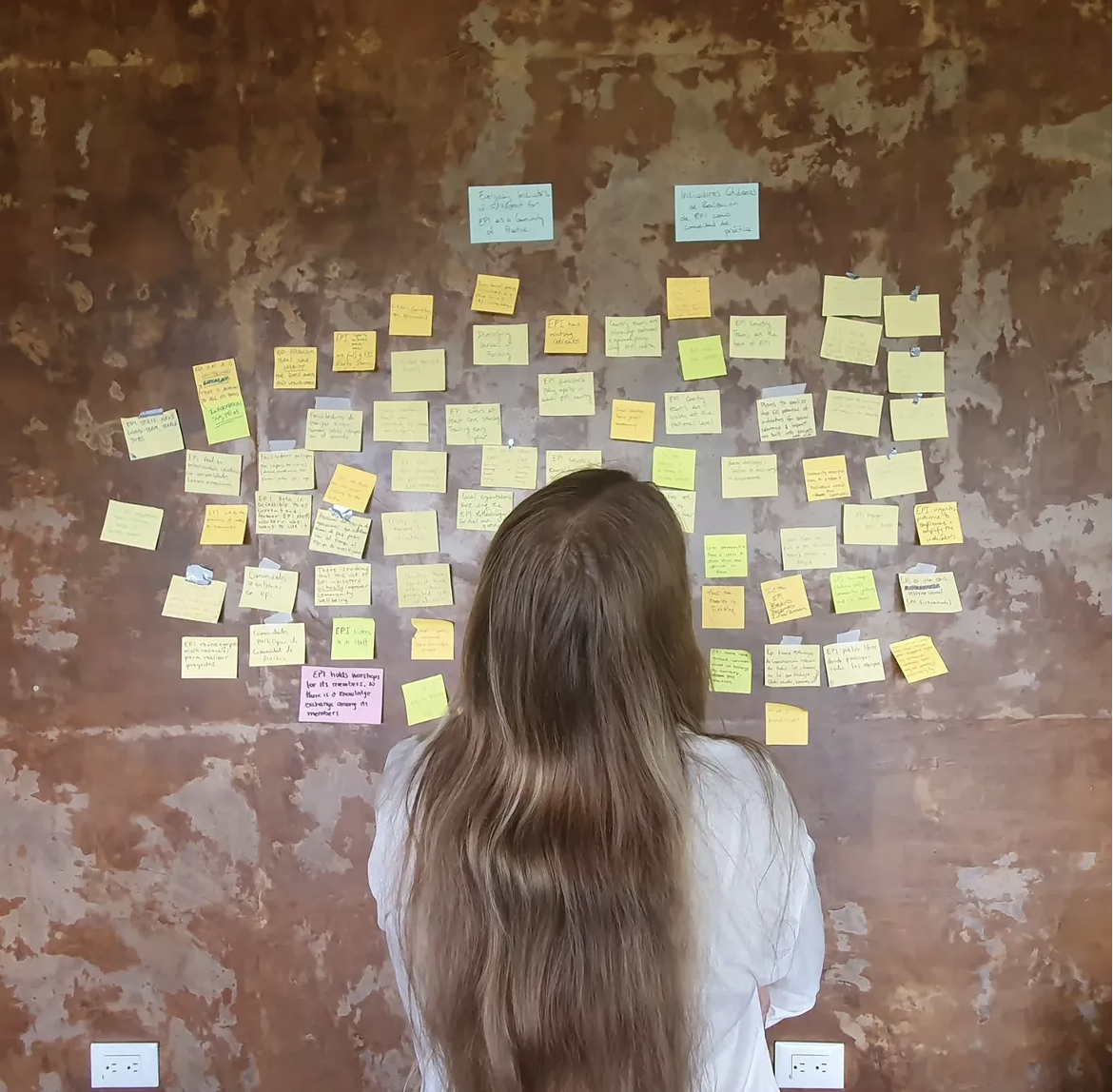
Arts-based and participatory peacebuilding is often asked to prove its value with tools that cannot cope with dynamic and emergent processes. This theme examines how such work can be evaluated in ways that are complexity-aware, inclusive and robust. My research has developed a principles-based approach to evaluating reconciliation, combined photovoice with community-generated indicators to build what we call inclusive rigour, and examined the long-term impact of participatory photography on those who take part. As a core member of the Inclusive Rigour Co-Lab, I contribute to frameworks for complexity-aware, community-centred peacebuilding evaluation, and I support researchers to evidence and assess the impact of their work.
Projects: Inclusive Rigour · Everyday Peace Indicators · These Photos Were My Life (film) · Arts-based Reconciliation and Evaluation
Key publications
Apgar et al. (2024). “Rethinking Rigour to Embrace Complexity in Peacebuilding Evaluation”. Evaluation.
Fairey, Firchow and Dixon (2022). “Images and Indicators: Mixing Participatory Methods to Build Inclusive Rigour”. Action Research.
Fairey, T., Kerr, R., Petrović, J. and Gow, J. (2020). New Bearings in the Evaluation of Post-Conflict Reconciliation: A Principles-Based Approach. King's College London.
Fairey, T. (2019). Evaluation Report: Balkans Diskurs Youth Correspondents Programme, Bosnia and Herzegovina. Art & Reconciliation Working Paper Series.
Fairey (2018). “Does the Impact of Participatory Arts Endure over Time?” In Participatory Arts for Invisible Communities. Omnimedia.
Fairey (2017). “These Photos Were My Life: Understanding the Impact of Participatory Photography Projects”. Community Development Journal.

© Jacinto Chila / TAFOS.
Photography As Social Practice
Photography is often understood as the work of an individual image-maker. This theme approaches it instead as a social and collaborative practice: a means of dialogue, exchange and community. It includes historical research on community and citizen photography, notably the Peruvian TAFOS archive, and a long-running visual dialogue with Liz Orton that informed the Photography & Culture special issue Photography as Dialogue. It also holds more than two decades of participatory photography practice with refugees, young people and marginalised communities, from PhotoVoice's early projects onwards.
Projects: Photography as Dialogue (special issue) · A Photo Dialogue (with Liz Orton) · TAFOS · Photography as a Social Practice · PhotoVoice archive, 2000–2015
Key publications
Fairey (2024). “A Photography of Becoming: Re-imaging the Promise of Participatory Photography”. In Contemporary Photography as Collaboration. Palgrave Macmillan.
Fairey (2022). “Investigando TAFOS: Un pionero de la fotografía comunitaria”. Campo Letrado Editores.
Fairey and Orton, eds (2019). Photography as Dialogue. Special issue, Photography and Culture.
Fairey (2019). “Building a History of Citizen Photography: The TAFOS Story”. Photography and Culture.